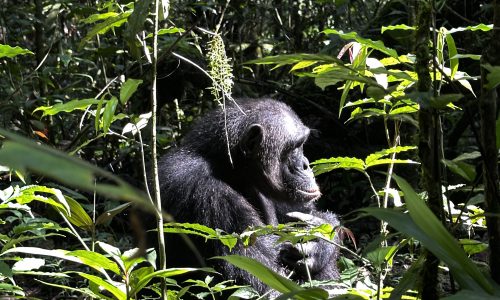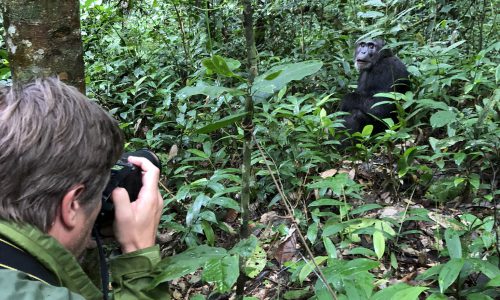
Chimpanzee trekking in Uganda’s Kibale National Park was one of the highlights of Susan’s recent visit, and it’s easy to see why this experience is often described as one of the most engaging wildlife encounters in Africa. Unlike traditional safari viewing from a vehicle, chimp trekking is immersive and active—bringing you into the rainforest on foot to spend time with our closest living relatives in their natural environment.
Kibale National Park is widely considered the best place in East Africa for chimpanzee trekking. The park protects the largest population of chimpanzees in Uganda—approximately 1,500 individuals—with several habituated communities available for tracking. The forest itself is beautiful and biodiverse, home to 13 species of primates as well as birds, butterflies, and forest elephants.
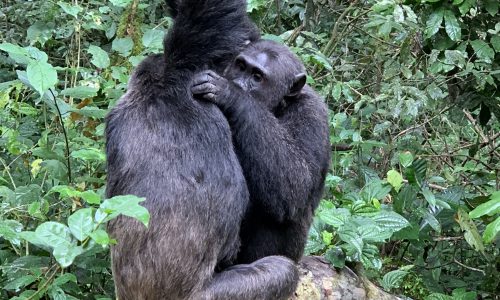
Chimpanzees share about 98% of our DNA, and observing their interactions—grooming, communicating, feeding, and moving through the forest—feels surprisingly familiar and often deeply moving. It’s a different kind of wildlife experience: more personal, more energetic, and wonderfully unpredictable.
Where Can you Track Chimpanzees?
We offer chimp trekking in Uganda, Rwanda and Tanzania.
In Uganda, while there are other places you can trek such as Kyambura Gorge and Budongo Forest – Kibale National Park is our top recommendation due to its large chimp population and excellent success rates.
In Rwanda, chimp trekking takes place primarily in Nyungwe National Park, a spectacular montane rainforest in the southwest of the country. Nyungwe also offers the opportunity to track golden monkeys in Volcanoes National Park.
While both Uganda and Rwanda offer excellent experiences, Kibale generally provides the most consistent sightings and the largest habituated chimp communities. Rwanda’s Nyungwe trekking tends to be steeper and more physically demanding but takes place in dramatic high-altitude forest scenery.
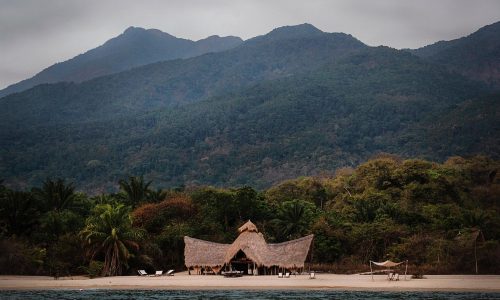
In Tanzania, chimpanzee trekking takes place in two remarkable but more remote locations: Mahale Mountains National Park and Gombe Stream National Park. Both are set along the shores of Lake Tanganyika and offer a very different experience from Kibale or Nyungwe—more adventurous, more exclusive, and wonderfully scenic. Mahale in particular is one of the most beautiful chimpanzee trekking destinations in Africa, combining forest hikes with time on the lake’s sandy beaches. Because these parks are accessed by light aircraft and boat, trekking here is typically incorporated into higher-end, off-the-beaten-path itineraries. Finally, you can also enjoy chimp trekking on Rubondo Island, located in the southwest corner of Lake Victoria. It’s again a very unique and remote setting, that would require at least 3-4 nights to make the trip out there worthwhile.
Permit costs (subject to change):
- Uganda (Kibale): $250 per person
- Rwanda (Nyungwe): $150 per person
- Tanzania: $300 per person
What to Expect?
Treks begin early in the morning at park headquarters. Susan stayed at Primate Lodge, conveniently located just a five-minute walk from the briefing point.
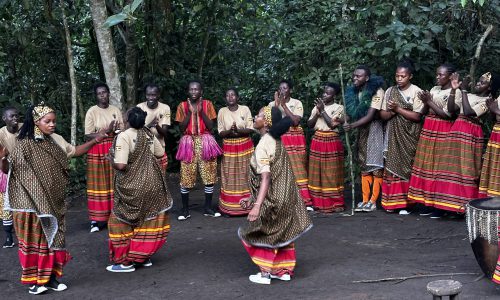
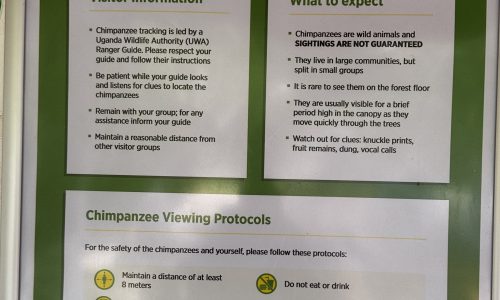
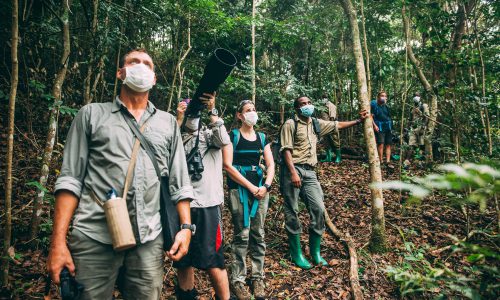
After arrival, visitors are welcomed with traditional music and dancing before rangers conduct a briefing covering safety procedures and chimp etiquette—maintaining distance, wearing masks, speaking softly, and avoiding sudden movements or contact.
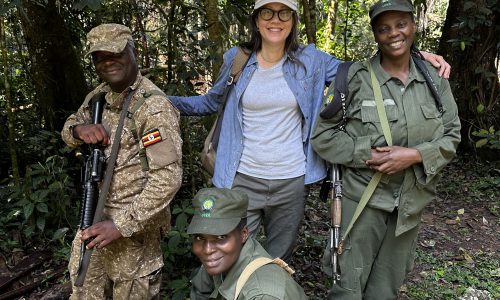
Guests are then divided into small groups, each accompanied by a lead ranger and experienced trackers who locate chimpanzees by listening for calls and monitoring their movements through the forest.
The trackers are remarkably skilled at navigating dense rainforest terrain and positioning guests safely for the best viewing opportunities.
What Happens Once Your Group has Located Chimpanzees?
Once the chimpanzees are located, everything becomes wonderfully dynamic.
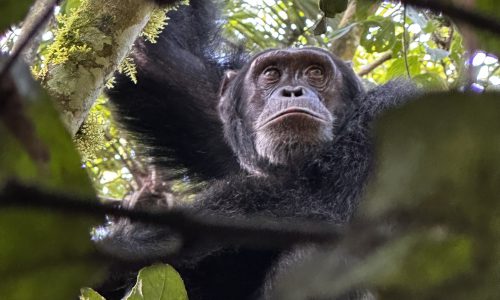
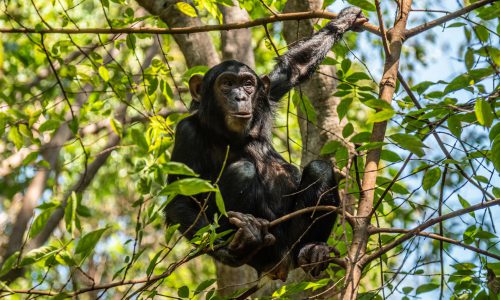
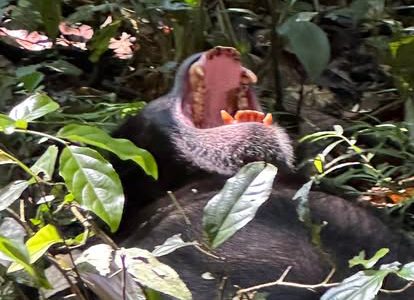
At first they are often high in the trees, calling loudly to one another and moving quickly through the canopy. When they descend to the ground, the experience becomes even more exciting. The forest fills with energy—vocalizations, movement, grooming interactions, feeding behavior, and playful social moments unfolding all around you.
Your guide plays an essential role in positioning the group safely and respectfully as the chimps move.
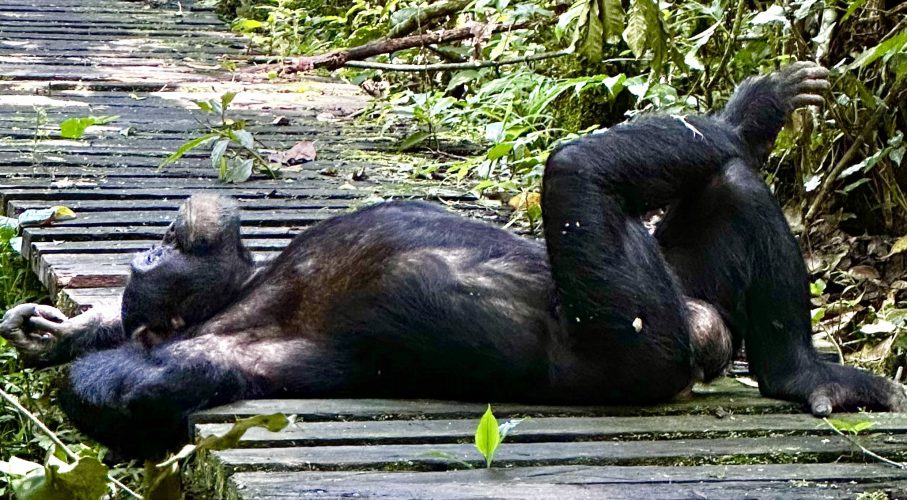
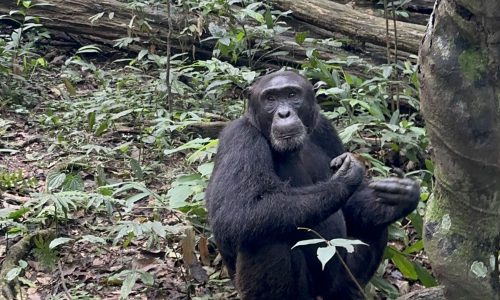
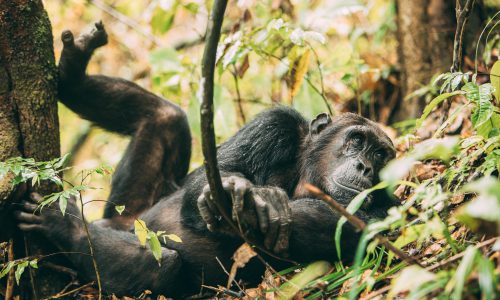
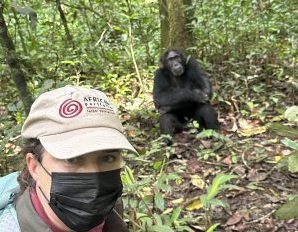
Even though multiple trekking groups may be tracking at the same time, sightings still feel intimate and engaging. Susan’s group watched individuals grooming each other quietly, lounging on walkways, and pausing mid-meal to listen before continuing to snack on leaves—small, fascinating behavioral moments that make the experience feel personal and memorable.
All together, she spent nearly three remarkable hours walking through the forest with the chimps—an unforgettable highlight of her Uganda journey.
What to Wear?
Chimp trekking takes place in tropical rainforest terrain, so practical clothing makes a big difference.
Susan recommends:
- Long khaki pants or water repellent pants
- Lightweight long-sleeved shirt (protection from nettles and thorns)
- Comfortable hiking shoes with good grip
- Hat
- Light poncho or rain jacket
- Binoculars and water in a small backpack
Tucking trousers into socks works perfectly well if you don’t have gaiters and helps keep safari ants away.
And yes—occasionally there may be unexpected “rainfall” from the canopy above. Susan can confirm that chimpanzee droppings do sometimes fall from the trees, reportedly a sign of good luck! But not to worry, as one of the nicest touches after returning to camp: many lodges will clean your boots and wash your laundry while you relax.
Why We Think Chimp Trekking is Worth Adding to Your Safari Itinerary..
Chimpanzee trekking complements classic game drives beautifully. It adds a completely different dimension to a safari experience—one that is active, immersive, and deeply human in its emotional impact.
Spending time with chimpanzees in the rainforest offers insight not only into wildlife behavior, but also into our own evolutionary story. For many travelers, it becomes one of the most surprising and meaningful moments of their time in Africa.
At African Portfolio, we will also often combine chimp trekking with gorilla trekking, as well as golden monkey trekking. A primate focussed itinerary is truly special and a very rewarding experience.
Ask us for an itinerary and the primates will certainly deliver!
Want some inspiration?
Check out some of our suggested itineraries – Primates and Wildlife I Gorillas of Rwanda I Gorillas in the Mist